Our territory is full of castles, watchtowers and rural fortifications that formed a very complete defensive system between the mountains and the coast.
The proposed route for this edition transports us to bygone times through a visit to the best-preserved and most accessible castles in our region, combining coast and inland: Denia Castle, Forna Castle and Moraira Castle.
A LITTLE HISTORY. We need to know where we've come from to decide where we're going.
The Marina Alta has a very interesting medieval heritage, especially as it was a border area during the Middle Ages between Christian and Muslim territories. This is why castles, defensive towers and the remains of fortifications are abundant, situated on mountains and strategic points.
The castles of the Marina Alta are not just military fortresses, but were part of a territorial control network: surveillance of agricultural valleys, defence against raids, control of routes to the sea and protection of the populations, first Muslim and then Christian.
Most are of Islamic origin and, to a lesser extent, Christian. After the conquest, some castles were transformed and expanded, such as those of Dénia and Forna, while others were gradually abandoned until they fell into ruin, such as Ocaive and Gallinera.
Tips for the routes
- Bring comfortable footwear and water.
- Respect nature and the architectural remains.
- For more information, consult the tourist information offices.
SUGGESTED ITINERARIES. Step by step, we make our way.
Denia
Stage 1: Denia Castle
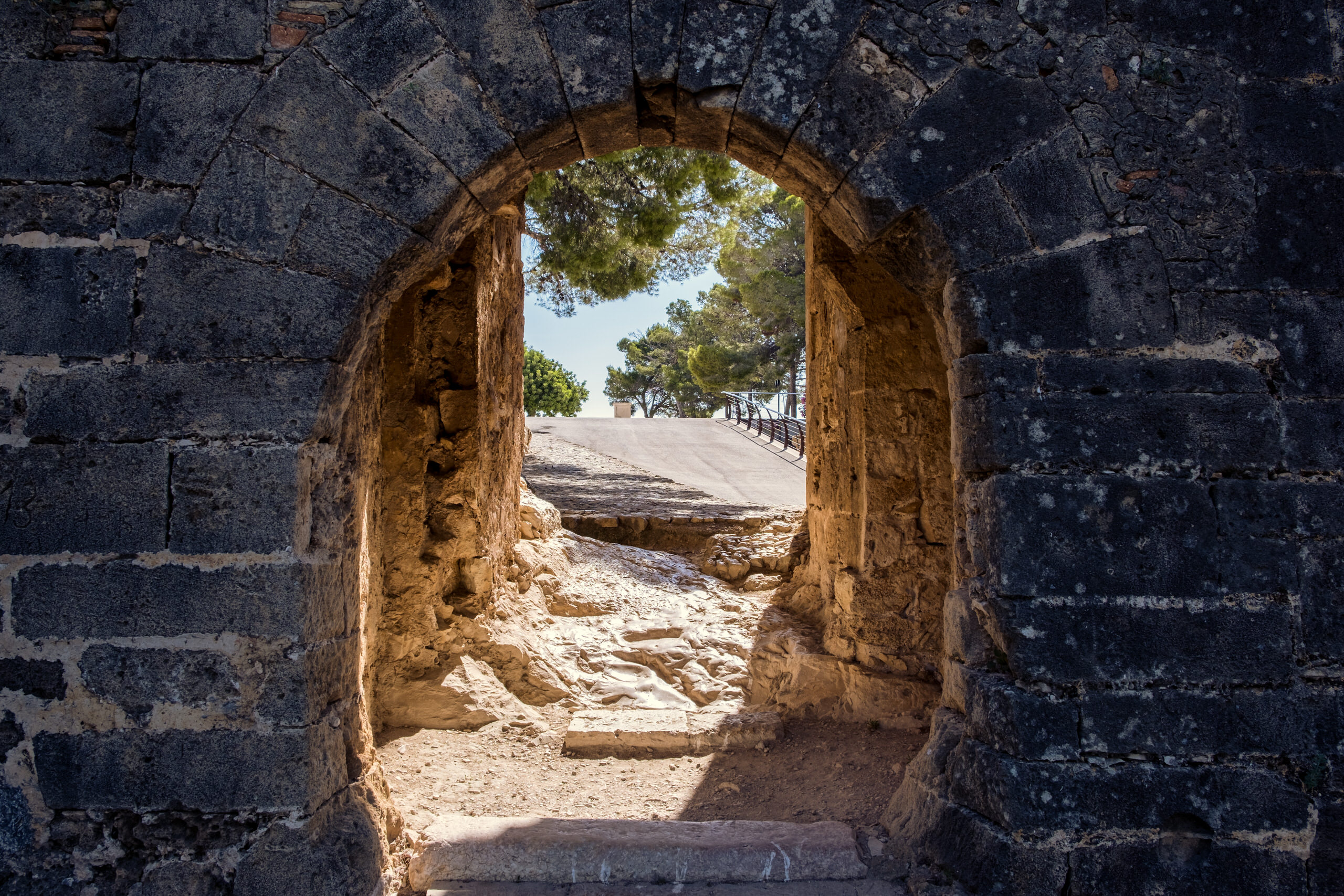
It is the most important fortress in the Marina Alta. It is situated on a rocky outcrop by the sea, from where it dominated the town and harbour, giving it great strategic value, with visual control over Montgó and the coastline. It was the centre of the defensive network, from which both the inland castles and the coastal towers were controlled. During the War of the Spanish Succession, it was severely damaged and abandoned until, in the early 19th century, it was in a state of advanced ruin. It was later passed into private hands until the local council acquired it and commissioned the restoration work that has given it its present appearance.
Today, the castle stands as an emblematic heritage site. You can visit the medieval walls and towers, as well as the Archaeological Museum, located within the grounds. The experience is completed by a walk around the fortress, offering panoramic views over the old town, the Montgó and the sea. Admission costs approximately 3 euros and no advance booking is required. In summer, the opening hours are extended and cultural activities such as concerts for the Festival Música al Castell, themed tours, craft re-enactments or night-time visits are held. At night, the views are particularly spectacular. Access is on foot from the town centre, up a flight of steps near the Town Hall and along the access ramp. The walk among the pines is an immersion in the medieval era.
Forna
Stage 2: Forna Castle
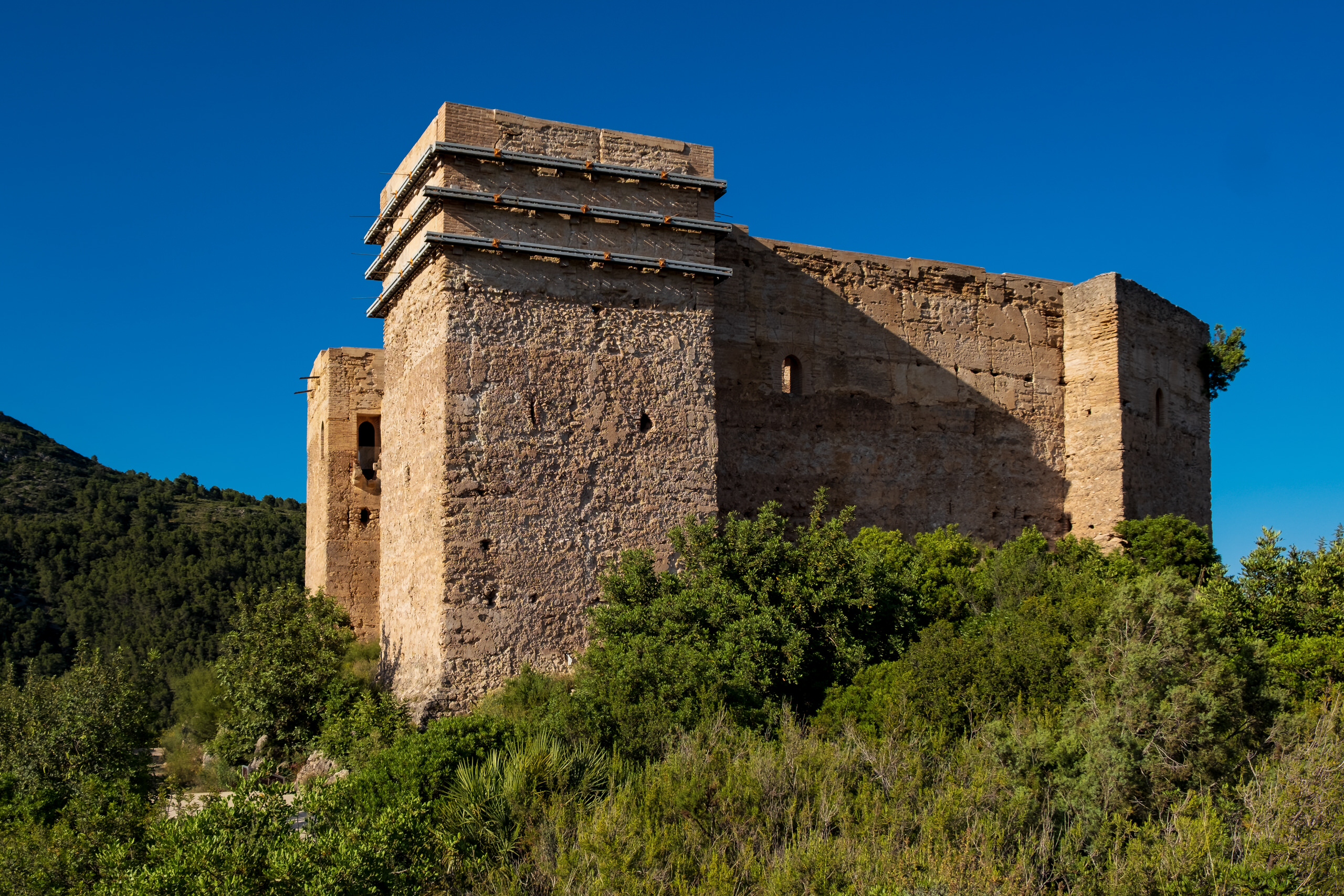
It is one of the best-preserved medieval fortresses in the Marina Alta. Situated in the municipality of Atzúbia, in a commanding position, it allowed for the defence of the rural territory, the control of inland routes and visual dominance over the valley, also serving as a refuge in the event of attacks. Erected after the conquest of James I, it is a fortified manor house in the Valencian civil Gothic style, dating from the 15th century. It was intended for the extended stays of a wealthy noble family, the Cruïllas, who came from Valencia.
The castle, built with local stone, is laid out on a rectangular plan with four towers at the corners, robust battlements and an inner courtyard. It has two storeys: the ground floor, with communal spaces, and the upper floor, which housed the noble apartments. Notable features include graffiti, sgraffito and master builder's marks, as well as decorative motifs that lend great historical interest. Currently, the exterior is freely accessible, but the interior is only accessible on occasional guided tours or at special events, as it is privately owned and undergoing restoration. Nevertheless, the visit is well worth it for the views and the surrounding landscape. The road is paved and allows vehicle access, but it is recommended to park in the village of Forna and walk up to better enjoy the surroundings.
Moraira
Stage 3: Moraira Castle
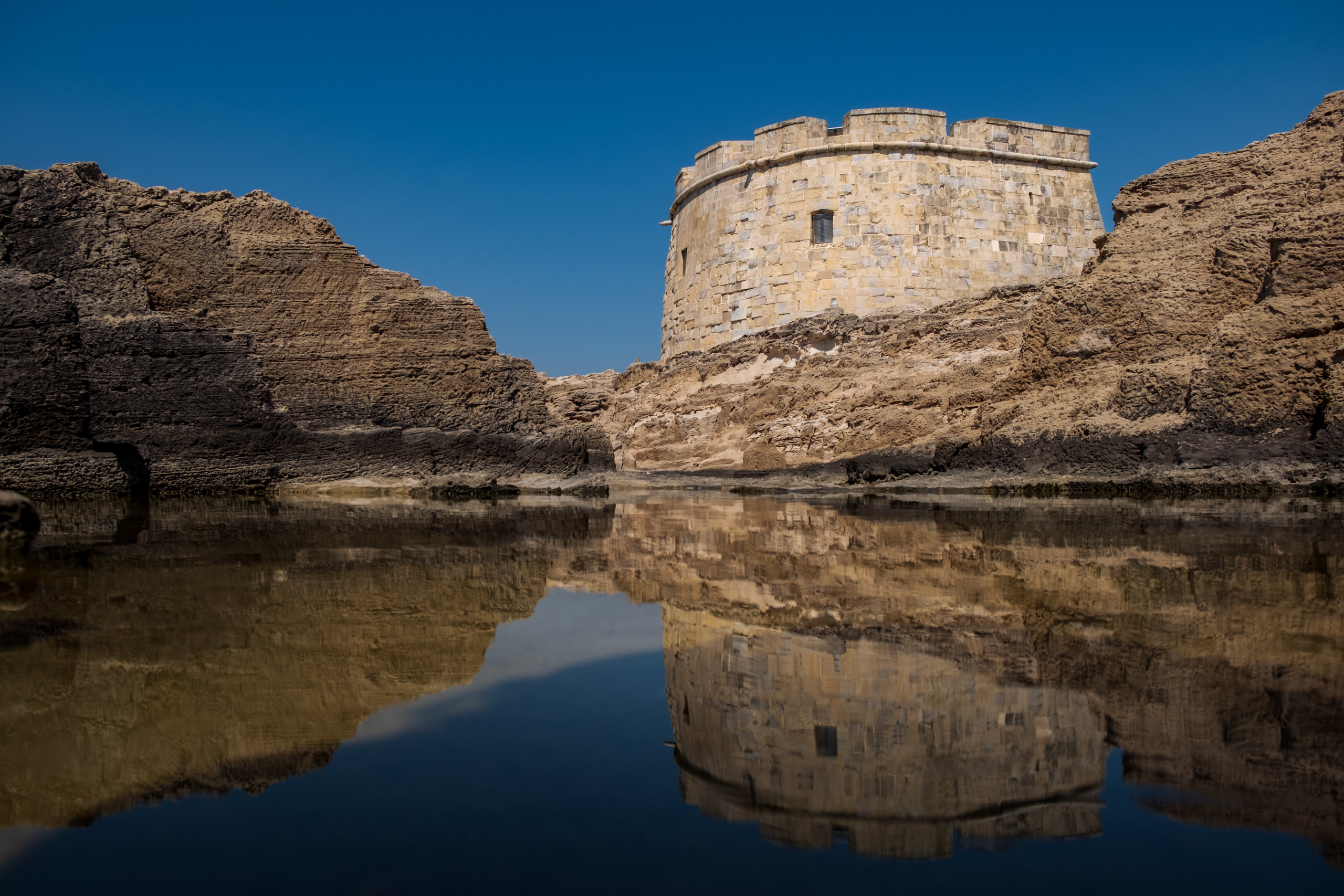
Moraira Castle is an 18th-century coastal fortress situated above Ampolla Beach. It was part of the defensive system promoted by Philip II to protect the coast from attacks by Barbary pirates. It is one of the town's most emblematic historical symbols. It was destroyed by the British Navy in 1801 and, after decades of neglect, was restored in the early 1980s, faithfully reproducing its original structure.
It features a “bull's foot” plan, with a semicircular façade facing south towards the sea, and a single entrance door to the north, crowned with the Bourbon coat of arms, which was accessed by crossing a moat via a drawbridge. The walls, about 10 metres high, are built of masonry and faced with rough-hewn stone blocks sourced from the area's fossil dunes. The roof, protected by a parapet, features arrow slits for defensive use. Inside, there are three vaulted naves with very limited lighting, which reinforces their military character. Other elements of the complex include a small hermitage located in front of the entrance and a cistern that supplied water to the garrison.
It currently houses a permanent exhibition on the watchtowers of the Valencian coast, as well as an audiovisual presentation dedicated to the sea and Mediterranean piracy. The views over Moraira harbour and the Peñón d'Ifac make it a prominent cultural and photographic attraction. It is, without doubt, one of the most emblematic heritage symbols of the Marina Alta coast.
*This experience is designed to be done in three stages, corresponding to three different days. We suggest some routes, but each person can adapt the experience to their abilities, physical stamina and interests. If you would like more information or places to visit in each town, you can visit the Descobrim la Marina Alta website and adapt the experience to your own tastes with your rucksack.
AND MORE. At the table and in bed at the first cry.
 Where to buy |  where to eat |
 where to sleep |  Activities and others |