The aim of this month's experience is to gain a deeper understanding of the historical event of the expulsion of the Moriscos from the Marina Alta. The proposal we present below will transport us through time on a journey through the places where the most significant events of the expulsion took place, particularly those related to the Morisc rebellion in the Vall de Laguar. We will focus on creating an itinerary linking the sites of battles, camps and embarkations, among others.
To do this, we will use the images of Jeroni Espinosa and Vicent Mestre, who were contemporaries of the events, as our guide, as they narrate the main events of the story. Therefore, this experience will be based on the information drawn from the images and the locations they show us. We will combine urban routes with mountain routes, along with visits to museums.
A LITTLE HISTORY. We know where we come from to decide where we are going.
In the 13th century, when James I conquered our lands, they were populated by Muslims, who continued to maintain their customs and their religion. This was permitted, as the population in our area was sparse and an expulsion would have caused serious demographic problems. However, Christian settlers from the north were also brought in. The first Christian settlement was established in Dénia, and a second was later founded in Xàbia. The rest of the comarca remained inhabited exclusively by Mudejars until the time of Al-Azraq's second revolt, when that section of the population who had taken part in the rebellion was expelled as a repressive measure. Over the following centuries, measures were attempted to control and convert the Muslim population, but these so-called New Christians continued to practise their religion in secret.
Although the Moriscos had eventually assimilated some of the characteristics of Christian society, their progress in this matter was not entirely satisfactory to the Christian church. As early as the late 16th century, the expulsion of these people from the Kingdom of Valencia to be relocated to Africa began to be considered, although it was not approved until 1609, during the reign of Philip III. It should be borne in mind that the intention was to send to Africa people who were completely rooted in our land, who had been here for several generations and who had never been to Algiers, where they were to be deported.
In the Marina Alta, the Morisc population occupied most of the rural and mountainous areas: la Vall d'Alcalà, la Vall de Gallinera, la Vall d'Ebo, la Vall de Laguar, el Verger, els Poblets, Beniarbeig, Sanet i els Negrals, Benimeli, el Ràfol d'Almúnia, Sagra, Tormos, Benidoleig, Pamis, Pedreguer, Gata de Gorgos, Senija, Llíber, Xaló, Alcalalí, Parcent, Benigembla and Castell de Castells. As for the Christian villages with a Morisco population, these were Ondara, Murla and Pego. The Christian towns were Dénia, Xàbia, Benissa, Teulada and Calp.
The order for the expulsion of the Moriscos from the Kingdom of Valencia was promulgated in September 1609 and the deportation was carried out from the ports of Valencia, Vinaròs, Dénia, Xàbia and Alicante. After the first voyages, rumours spread that they were mistreated or even murdered during the journey. Along the way, they suffered mistreatment, rapes, and murders, and their children and belongings were taken from them. This, along with pre-existing unrest, was the trigger for several rebellions, such as that of la Vall de Laguar. This was eventually suppressed by the Spanish tercios, and more than 40,000 people were shipped from the port of Dénia or Xàbia to Oran. Along the way, they suffered ill-treatment, rape, and murder, and their children and belongings were taken from them.
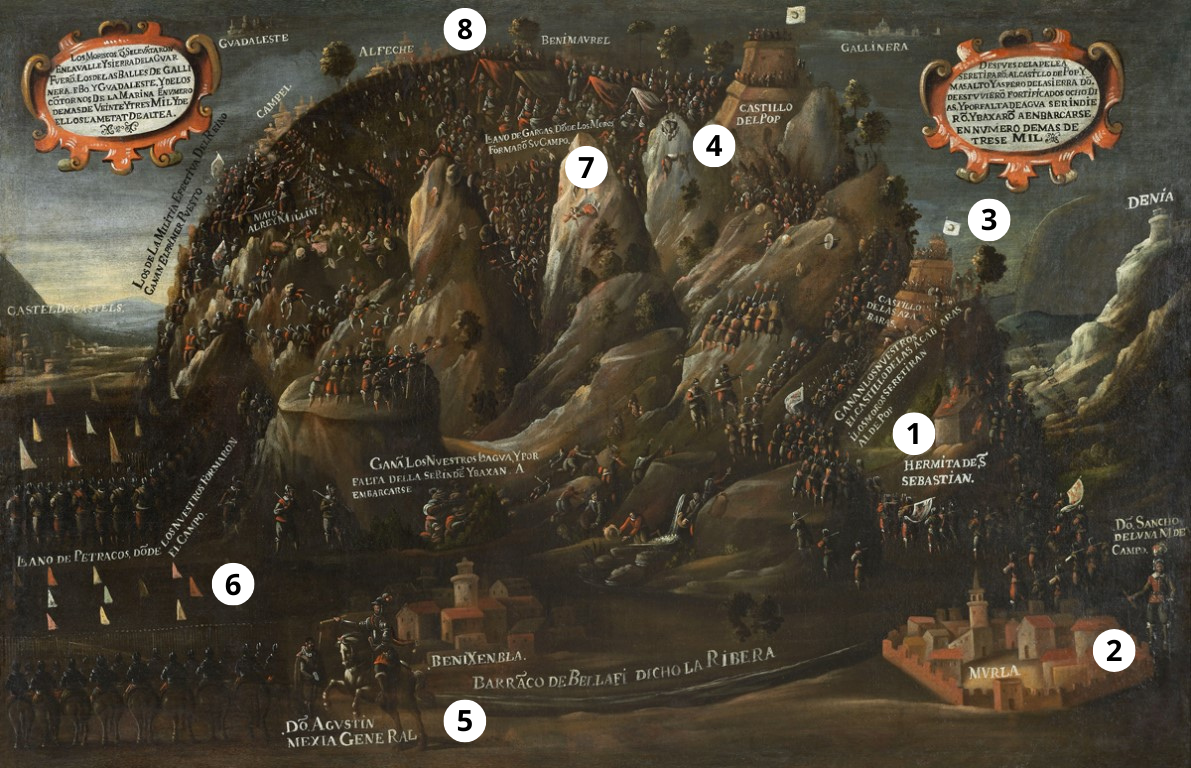 Rebellion of the Moriscs at Laguar mountains. Jeroni Espinosa 1612-1613.
This painting briefly explains, visually and with some text, the Morisc rebellion and its outcome. On the ‘mensula’ at the top left-hand end we find the following inscription: “The Moriscos who rose inla Vall de Laguar and la Serra de Laguar were those from the valleys of Gallinera, Ebo and Guadalest, and from the environs of the Marina, numbering more than 23,000, and of these, half were from Altea”. Indeed, at the beginning of the rebellion, only the inhabitants of la Vall Laguar were present, remaining in their homes. However, rebels from other areas gradually joined them: from Xaló, the nearby valleys, Altea, and Guadalest, among others. In the top right-hand corner we can read: “after the skirmish they retreated to Pop Castle, the highest and most rugged of the Serra, where they were fortified for eight days, and for lack of water they surrendered and came down to embark, numbering more than 13,000”. This sentence refers to the capture of the castle of Atzavares by the Christians, which caused the Moriscos to take refuge in that of Pop. Although they eventually had to surrender and embark. We will now comment on the development of the event chronologically, with the help of the numbers inserted into the image.
- After the expulsion decree was promulgated, the Moriscos began to move from Xaló and Murla towards la Vall de Laguar, where the entire Morisco population was still in their homes. During the journey they attacked religious images and set fire to the hermitage of Saint Sebastian of Murla. They settled in la Vall de Laguar and took the castle of Les Atzavares. Gradually, more Moriscos joined them from various areas of the comarca or even from the Marina Baixa. On 28 October, the Moriscos from Parcent joined them and, as they passed through Murla, clashed with the Christians who lived there.
- Faced with this situation, Murla felt threatened and began to prepare to defend itself. On 4 November, Sancho de Luna arrived with his troops, having been in Dénia, to defend Murla from possible Moorish attacks and to put a stop to the rebellion.
- Sancho de Luna led his soldiers to the castle of Atzavares, where the Moriscos had settled. The Christians captured the fortress and their enemies had to flee to the castle of Pop on the 16th of November.
- With the Moriscos now at Pop Castle, an attempt was made to negotiate an end to the conflict in a relatively peaceful manner. An agreement was not reached and hostilities began.
- At Benigembla, the battalion commanded by Agustín Mejía met up with the tercio from Sicily, who intended to reach la Vall de Laguar via the Garga Plain.
- The Christians set up their camp at the Pla de Petracos, from where they began to ascend to the Pla de Garga, where there was a Moorish camp.
- Upon reaching the Pla de Garga, many Moriscos managed to flee and moved towards Laguar.
- The Christians, after the defeat at the Pla de Garga, also went towards Laguar, entering via Benimaurell. They subsequently took Fleix and Campell. The surviving Moriscos hid in the cliffs of the Cavall Verd. On 29 November, the exhausted Moriscos, having no access to water or food, surrendered and went down to the port to embark.
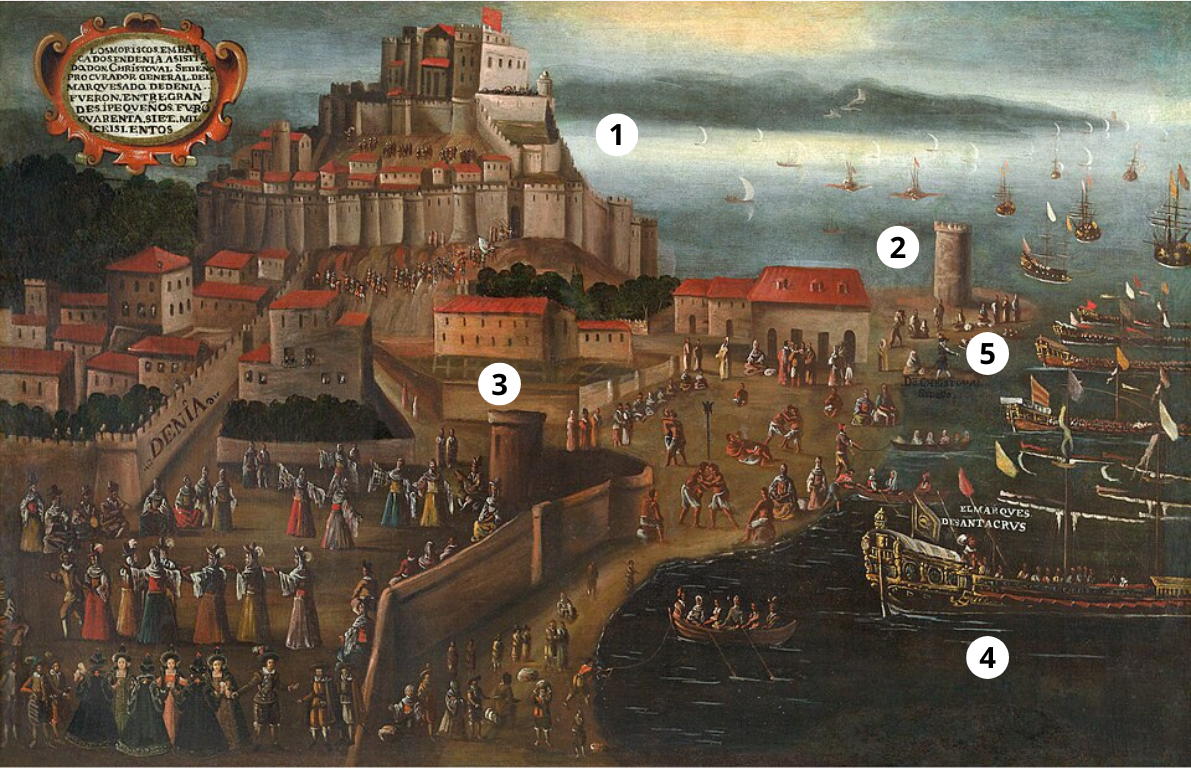 The expulsion in Dénia. Vicent Mestre.
In this second image, we can observe the embarkation of the Moriscos at the port of Dénia. In the top left-hand corner we can read: “The Moriscos embarked at Dénia, assisted by Don Cristóbal Sedeño, procurator general of the Marquessate of Dénia, numbered 47,600 in all”. At the summit of the castle the new palace of the Duke of Lerma (1), 5th Marquess of Dénia, can be seen. A battalion of soldiers enters the fortress through the ‘Porta dels Reis’ or ‘Porta dels Socors’, crossing the Old Town, on the left of which stands the church with its bell tower. Outside the castle grounds and enclosed within its walls is the old quarter, which has become the main centre of the city. A little further towards the sea, we find the Convent of Sant Antoni (3). At sea we can observe the galleys under the command of the Marquis of Santa Cruz (4). We also see Don Cristóbal Sedeño, commissioner for the embarkation of the Moriscos (5). At the end we find the Torreta del Raset (2), an old tower that is no longer preserved.
Tips for the routes
- Wear comfortable footwear and bring water.
- Respect nature and the architectural remains.
- For more information, please consult the tourist information offices.
SUGGESTED ITINERARIES. Step by step, we make our way.
Murla and Castell de Castells
Stage 1: Murla - Hermitage of Saint Sebastian - Pla de Petracos
The first stop on this tour will be Murla, as it was where the first confrontations between the New Christians and the Old Christians took place, and it became a battlefield. The first place to visit will be the Hermitage of Saint Sebastian, which, as we have already mentioned, was burnt down by the Moriscos as they were moving towards Laguar. However, it was later restored after that incident. Furthermore, it was renovated in 1994. For this reason, we will find it in very good condition.
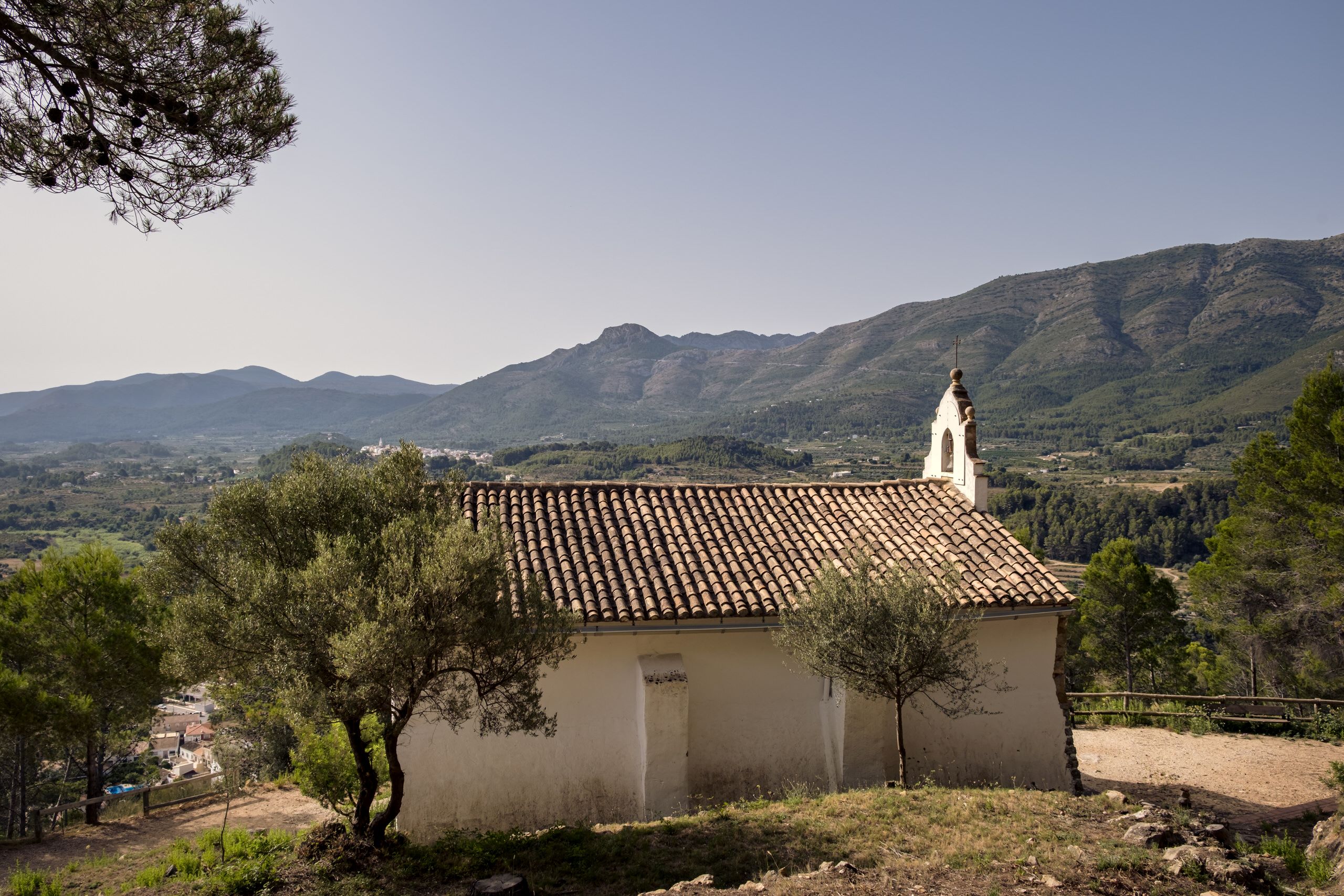 Hermitage of Saint Sebastian.
Afterwards, we can take the opportunity to visit the fortified church of Saint Michael the Archangel and the old wash-house. It would also be interesting to try the typical “borreta de melva” in one of the village's bars, a stew of vegetables and salted fish, characteristic of the area. Afterwards, we will move on to the next stop, Pla de Petracos, in the term of Castell de Castells.
Pla de Petracos is of interest because it is where the Christians formed their camp before attacking the Moriscos via Pla de Garga and reaching la Vall de Laguar. However, it is also notable for its rock paintings, which are designated as a Cultural Asset of Interest and a UNESCO World Heritage Site. We can find the macro-schematic art in a series of rock shelters on the mountainside, by the Malafí ravine, which also appears in the first illustration we discussed.
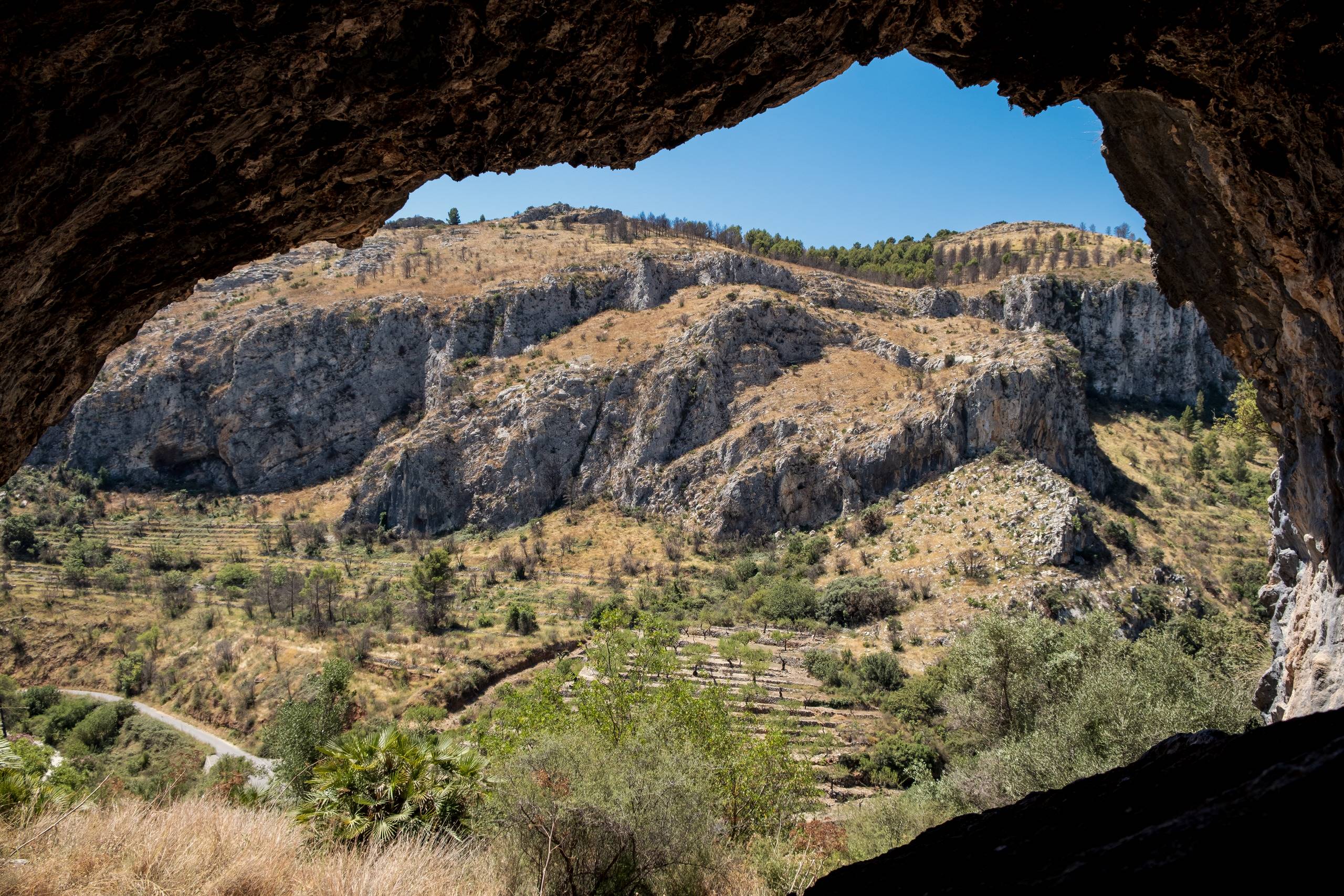 Pla de Petracos.
The next stage will begin at Benigembla. On the way, we can stop at the Hermitage of Pla de Petracos, which is on our route. Construction of this hermitage began after the decree expelling the Moriscos in 1609, although it was never completed. Around 1870, the priest of Castell de Castells raised funds to finish it, but they were stolen and the hermitage was left abandoned. Despite this, it is still worth visiting for its historical and artistic value.
Benigembla and la Vall de Laguar
Stage 2: Moorish Path to the Ridge of the Peñón
This next stage is a walk from Benigembla to the end of la Vall de Laguar. This path was used by the Moriscos to reach the Cavall Verd as a symbol of rebellion against the king when the expulsion of all Moriscos from the Kingdom of Valencia was decreed. It is a linear route, 2.52 kilometres long and of moderate difficulty. We start at the Baldomero Vega square and pass through the Ribàs Botanical Park to the village fountain and the wash-house. Afterwards, we will cross the Xaló river via the Solanes path, and at one point on the route we must take a detour along the right-hand path, from which we begin the ascent to the cliffs of the Cavall Verd.
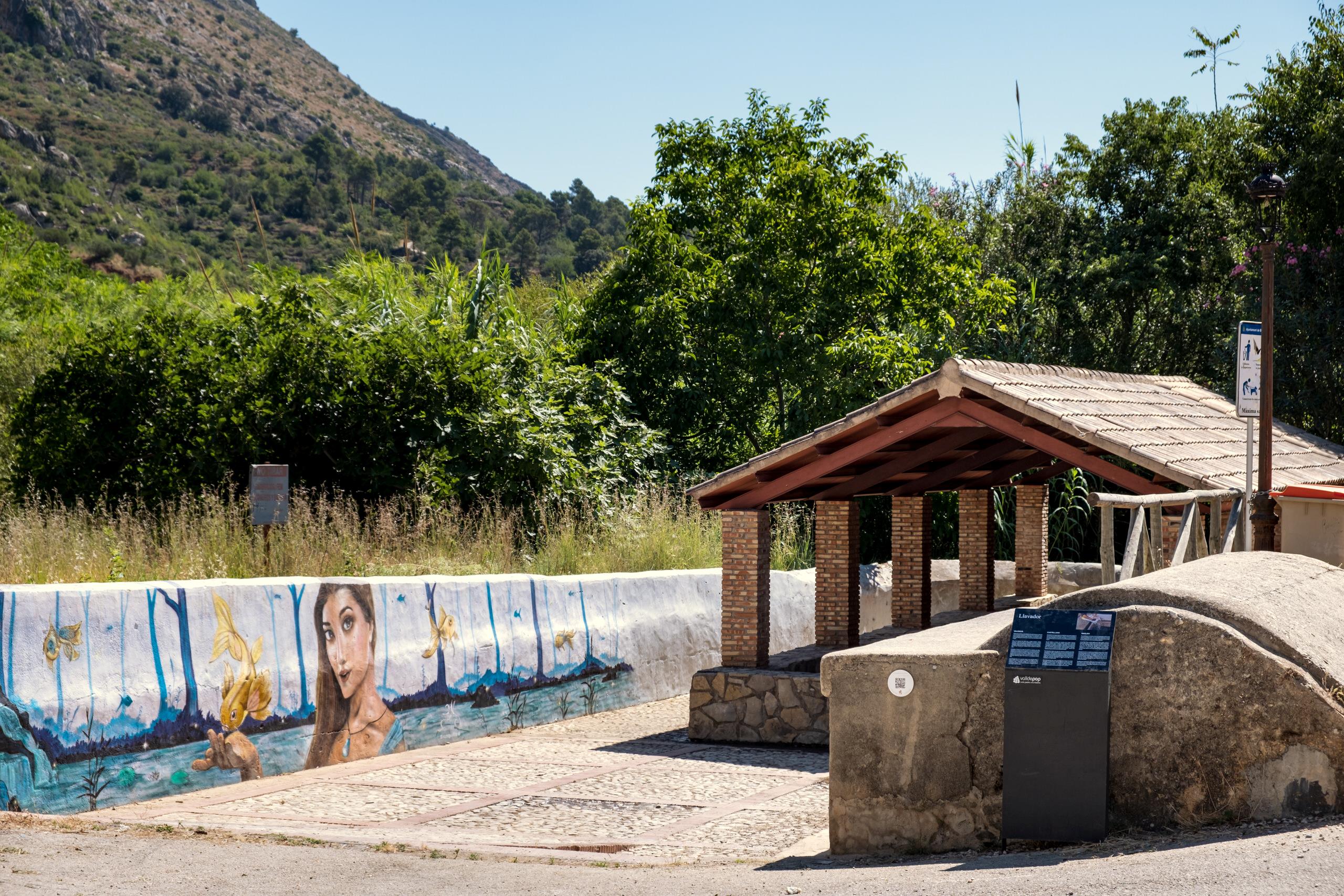 The wash-house.
On returning to Benigembla from the walk, we can take the opportunity to rest and sample the typical rice with chard and turnips to warm up.
La Vall de Laguar
Stage 3: Benimaurell - old washhouse - Castle of the Atzavares - Wall of Fontilles
The third stage will begin from Benimaurell, in la Vall de Laguar. From there we will head to the Benimaurell wash-house, built in the 19th century. Afterwards we will walk to the Castle of Les Atzavares, situated on a summit above vertical rock faces facing north, where the remains of hard-consistency adobe walls can be seen. These are straight alignments that define two rectangular enclosures, partially excavated into the rock. It served as a refuge for the Moriscos before they fled to the castle of Pop.
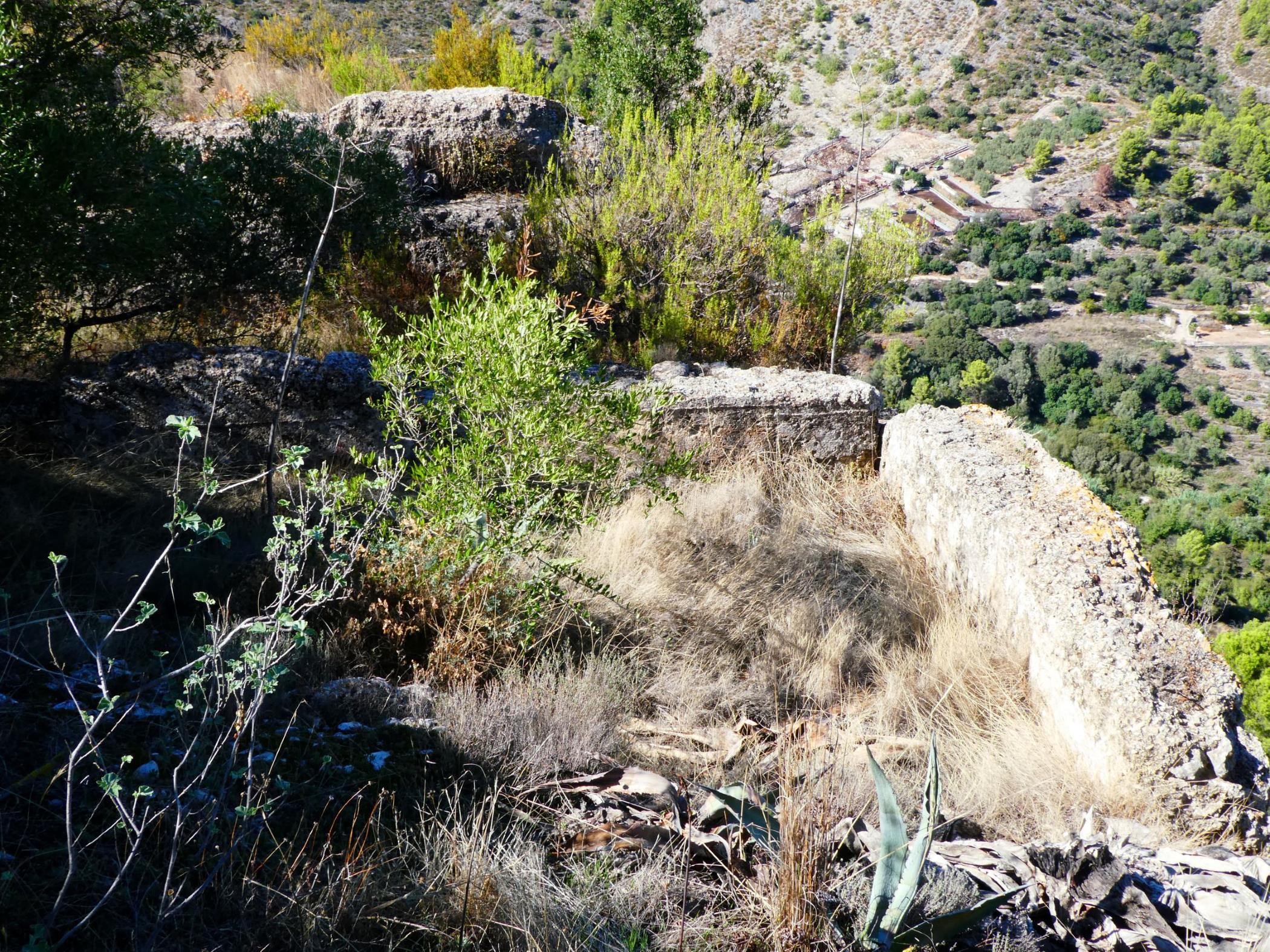 Atzavares castle.
Taking advantage of being near Fontilles, we can stop by to visit the sanatorium and the old ramparts. Afterwards, we can sample the typical flatbreads or local cured meats.
Dénia
Stage 4: Castle - Archaeological Museum of the Castle - Rock Quarter - Port - Ethnographic Museum
The final stage of this experience is a day visiting the city of Dénia which, as we know, was of great importance during the Morisc expulsion. From its port, thousands of Moriscos embarked for Oran. The first stop will be the castle. Its design dates back to the Islamic era, between the 11th and 12th centuries. The Muslims made use of the ancient structures built by the Romans, as indicated by the remains found during excavations in the underground areas.
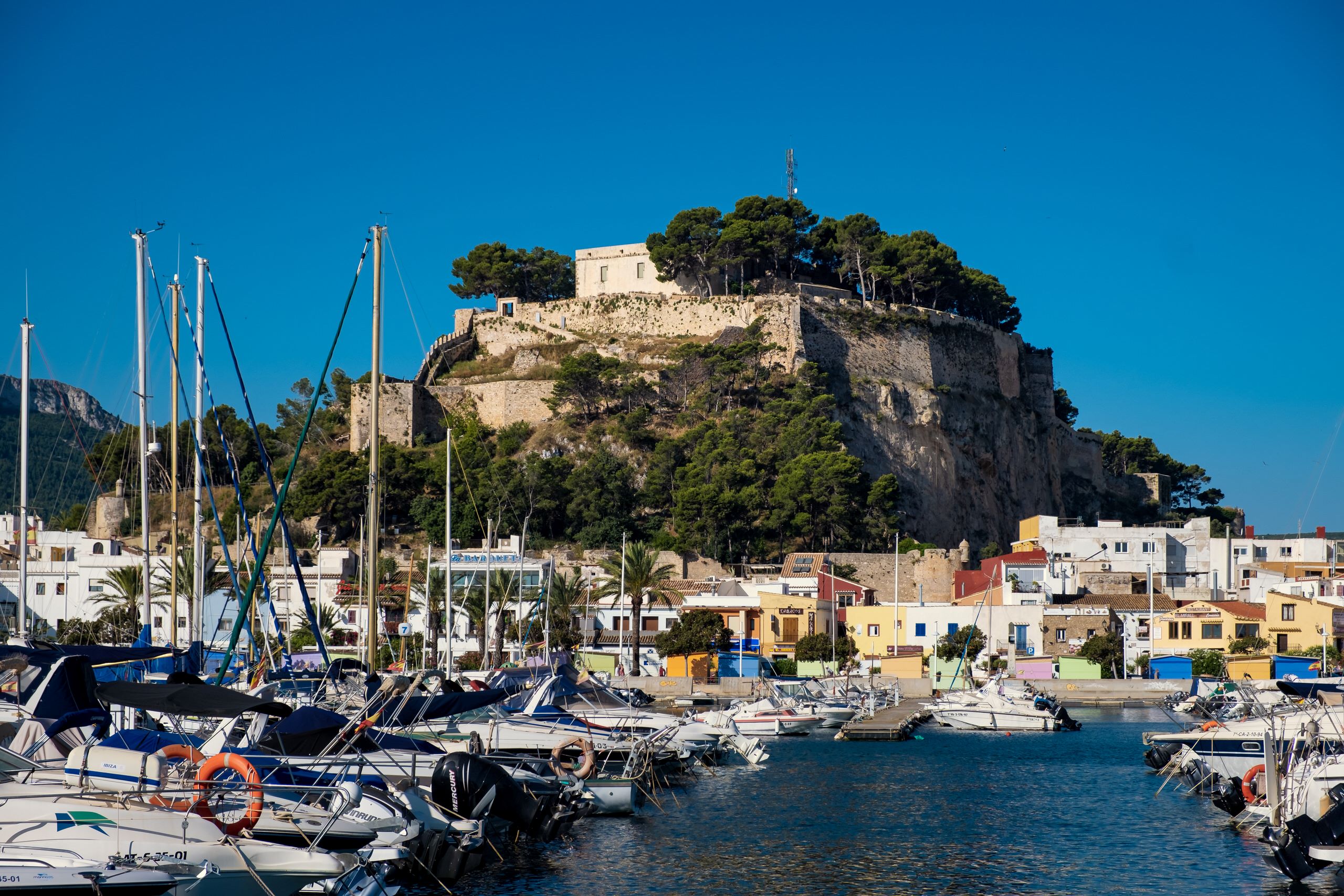 The castle in Dénia.
The Archaeological Museum of the city is located in the upper part of the castle, in the extension carried out to the Governor's Palace. This museum presents the development of the city from its origins to the 18th century. It can be visited to expand our knowledge of the history of Dénia, although you should check the opening hours beforehand. After finishing your visit to the museum, it would be interesting to go to the port, passing through the Roques district, which was formerly part of the walled slum. Local historians and excavations have shown that this area is part of the Arab city, the medina from before the 13th-century Christian conquest, with its bathhouses, mills, ovens, etc.
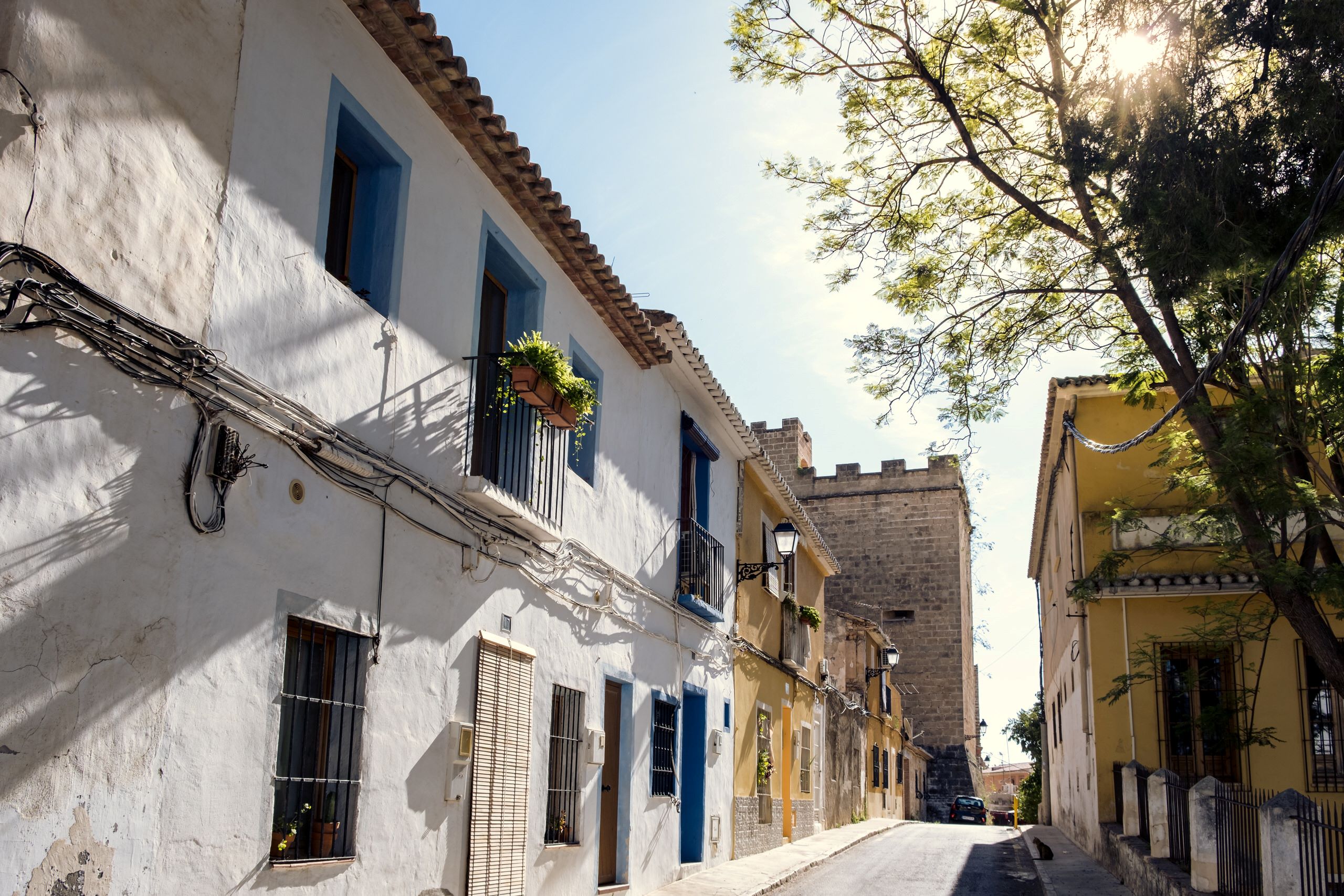 The Roques district.
 We will make our way to the port through the Barri Baix la Mar. This area features low-rise houses, squares and charming corners. The mostly pedestrianised streets and the seafront opposite the port form a pleasant promenade with many terraces and a wide range of dining options. The port of Dénia was an important centre for maritime traffic until the arrival of the Christians in 1244 and has a commercial and pirate past that would turn it into a den of corsairs in the 15th century. In 1609, it became the main port for the exile of the Moriscos. After the city's destruction in 1705, its recovery began at the end of the 18th century with the export of raisins and the establishment of French trading houses. We can stop in this area to rest and have a drink before continuing with the route. We recommend trying the typical dried octopus from Dénia.
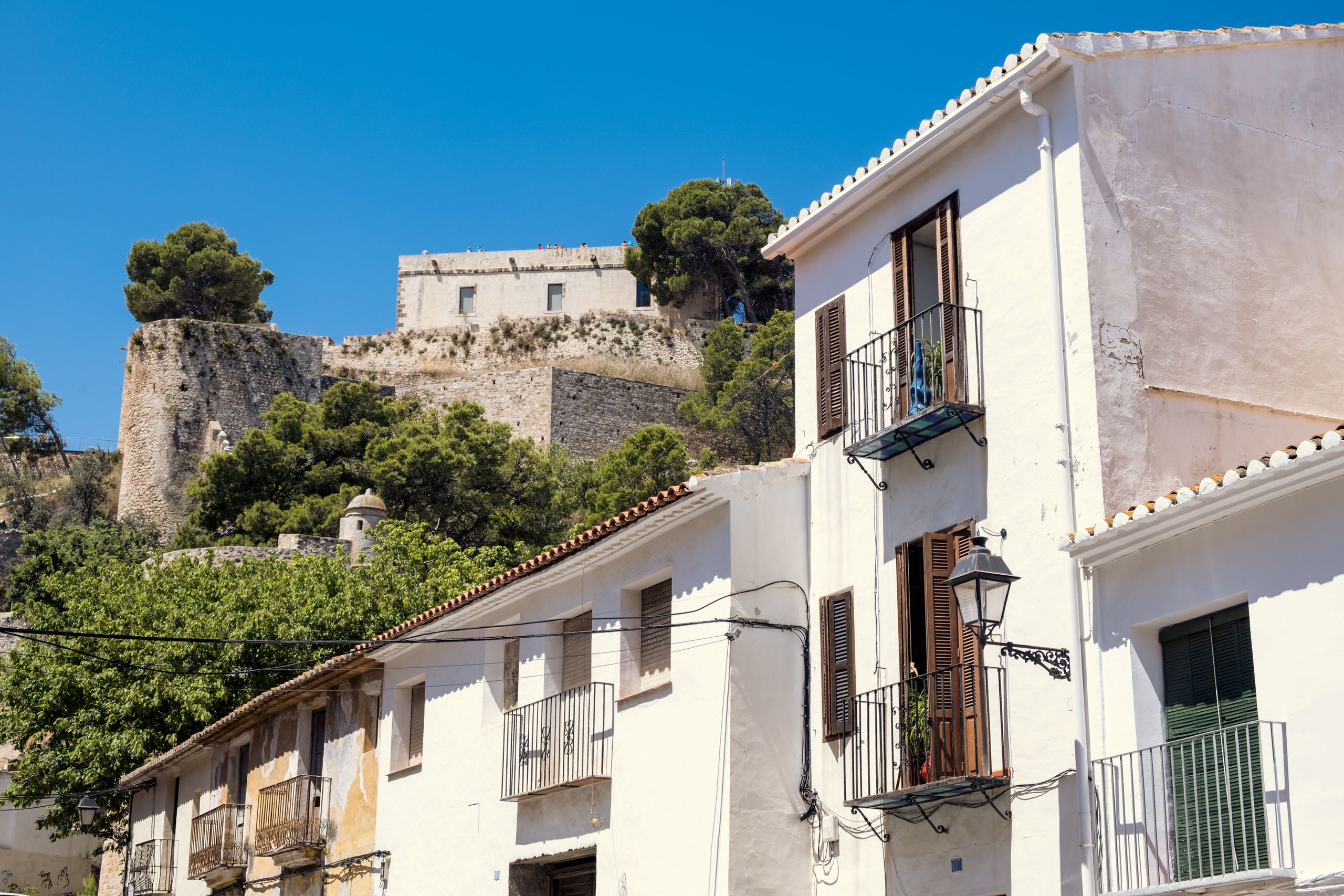 Baix la Mar district.
Finally, it would be a good idea to visit the Ethnological Museum which, although it has no connection with the expulsion of the Moriscos, is very interesting for learning about the more recent history of Dénia. This museum is housed in a building that is a representative example of 19th-century bourgeois housing, enriched by the capers trade. The museum has an interesting display of the luxury costumes and accessories of the bourgeoisie of the period, as well as their workwear and tools.
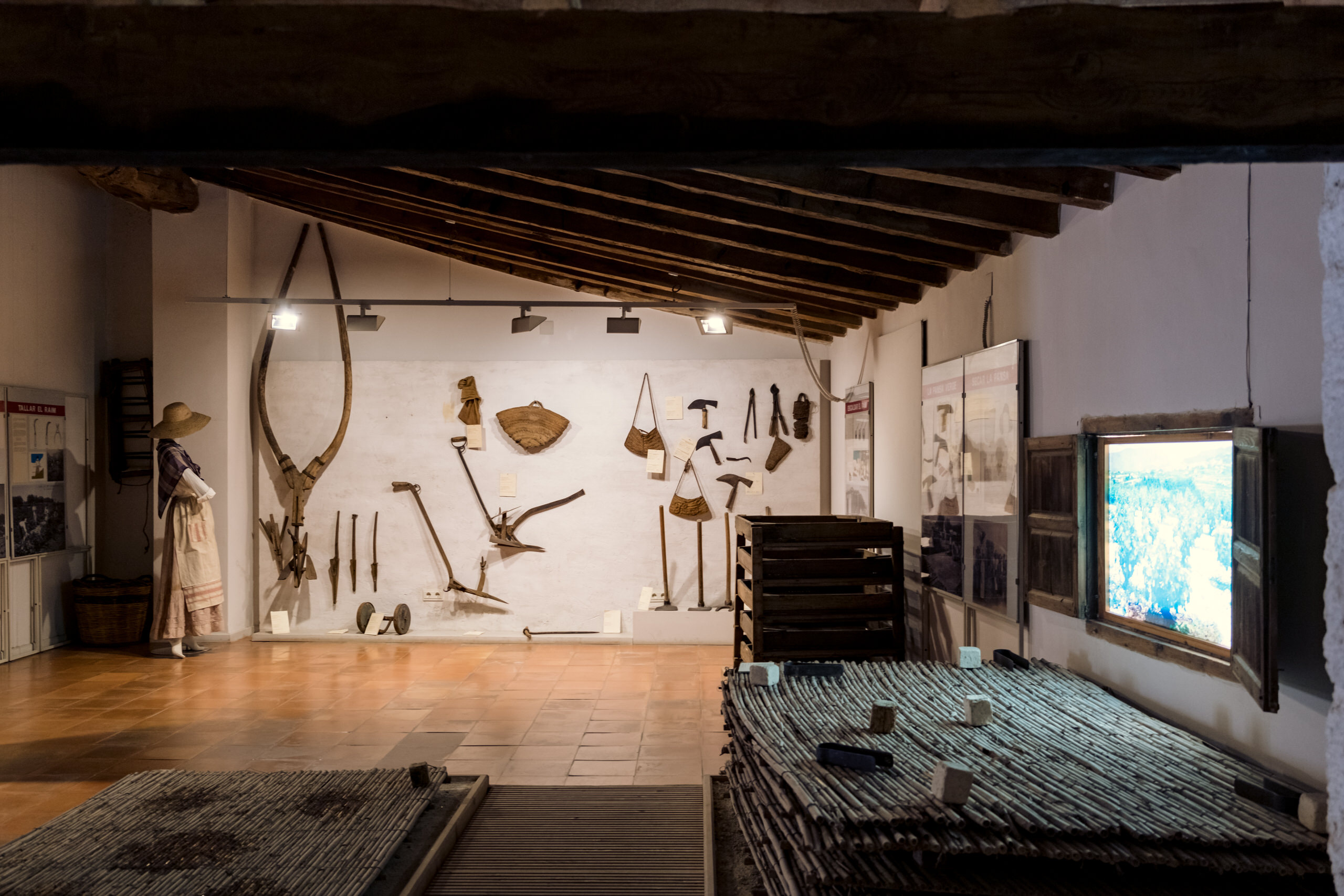 Ethnological Museum.
*This experience is designed to be undertaken in four stages, corresponding to four different days. We suggest some routes, but each person can adapt the experience to their abilities, physical endurance and interests. If you'd like more information or additional places to visit in each village, you can visit the Descobrim la Marina Alta website and tailor the experience to your tastes with your rucksack.
AND EVEN MORE. At the table and in bed at the drop of a hat.
 Where to buy |  where to eat |
 where to sleep |  Activities and others |
Translated with DeepL.com